Computational Linguistics (September 17th, 2025)
In planning for this activity, you may find it helpful to write the following on a chalkboard down before the club meeting starts.
BAR ZC9 FCC89 ZCFAE 8AE 8AR OE BSC89 ZCF 8AN OVAE ZCF9 4OFC89 OFAM FAT OFAE 2AR OE FAN
OEFAN AE OE ROE 8E 2AM 8AM OEFCC89 OFC89 89FAN ZCF S89 8AEAE OE89 4OFAM OFAN SCCF9 89 OE FAM
8AN 89 8AM SX9 OFAM 8AM OPAN SX9 OFCC89 4OF9 FAR 8AM OFAR 4OFAN OFAM OE SC89 SCOE EF9 E2
AM OFAN 8AE89 OEOR OE ZCXAE 8AM 4OFCC8AE 8AM SX9 2SC89 4OE 9FOE OR ZC89 ZCC89 4OE FCC89 8AM
8FAN WC89 OE89 9AR OESC9 FAM OFCC9 8AM OEOR SCX9 8AII89
BOEZ9 OZ9PCC8 4OB OFCC89 OPC89 OFZC89 4OP9 8ATAJ OZC9 4OFCC9 OFCC9 OF9 9FCC9 4OF9 OF9EF9
OES9 F9 8ZOE98 4OE OE S89 ZC89 4OFC89 9PC89 SCPC89 EFC8C9 9PC89 9FCC2C9 8SC8 9PC89 9PC89
8AR 9FC8A IB*9 4OP9 9FC89 OFAE 8ZC89 9FCC89 C2CCF9 8AM OFC89 4OFCC8 4OFC89 ESBS89 4OFAE
SC89 OE ZCC9 2AEZQ89 4OVSC89 R SC89 EPAR9 EOR ZC89 4OCC89 OE S9 RZ89 EZC89 8AR S89
BS89 2ZFS89 SC89 OE ZC89 4OESC89 4OFAN ZX9 8E RAE 4OFS89 SC9 OE SCF9 OE ZC89 4OFC89 4OFC89
SX9 4OF9 2OEFCC9 OE ZC89 4OFAR ZCX9 8C2C89 4OFAR 4OFAE 8OE S9 4OQC9 SCFAE SO89 4OFC89
EZCP9 4OE89 EPC89 4OPAN EZO 4OFC9 EZC89 EZC89 SC89 4OEF9 ESC8AE 4OE OPAR 4OFAE 4OE OM SCC9
8AE EO*C89 ZC89 2AE SPC89PAR ZOE 4CFS9 9FAM OEFAN ZC89 4OF9 8SC89 ROE OE Q89 9PC9 OFSC89
4OFAE OFCC9 4OE SCC89 2AE PCOE 8S89 E9 OZC89 4OPC89 ZOE SC89 9ZSC9 OE SC9 4OE SC89 PS8 OF9
OE SCSOE PAR OM OFC89 8AE ZC9 OEFCOE OEFCC89 OFCOE 8ZCOE O3 OEFCC89 PC89 SCF9 ZXC89 SAE
OPON OEFOE
In this activity, we took free books from the library (NOTE: Grabbing books randomly may result in people seeing unpleasant things when they open their books.) and had everyone find 3 words that had the highest frequency on any given page. After some time, ask students what they think is the relationship between these words.
Next, we demonstrated Zipf's Law by taking a poll of the count of each word that a student had in their list (i.e. "the" occured 15 times, "of" occured 7 times, and "and" occured 4 times.) and drawing the following graph.
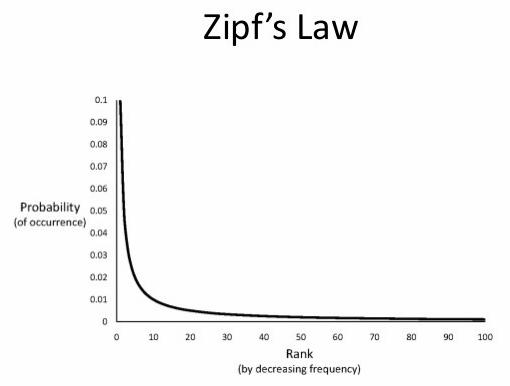
Which shows "the" is the most used word, "of" is the second most used word and is used half as much as "the", and "and" is the third most used word and is used one third as much as "the."
After this, we showed an application of Zipf's law to the Currier alphabet. The text above represent a page from the Voynich manuscript (or rather, Voynich B). First, we had students find the 3 most common "words." Next, we had them think about the relationship between them. Then we had them find the number of times each "word" happened. Furthermore, we asked the students if they thought this language was real or not based on if it followed Zipf's law. The answer is Voynich A is most likely a real language because Voynich A has the following patterns for the top 3 "words" 4.5, 2.5, 1.6 (which follows our intuition about Zipf's law). Although, Voynich B doesn't have the same patterns for its "words" as it has 2.1, 1.8, 1.8, so that question is unresolved for this case.