Physics Club Collaboration (March 5th, 2026)
In this meeting we made computer-generated holograms and discussed the math and physics behind them!
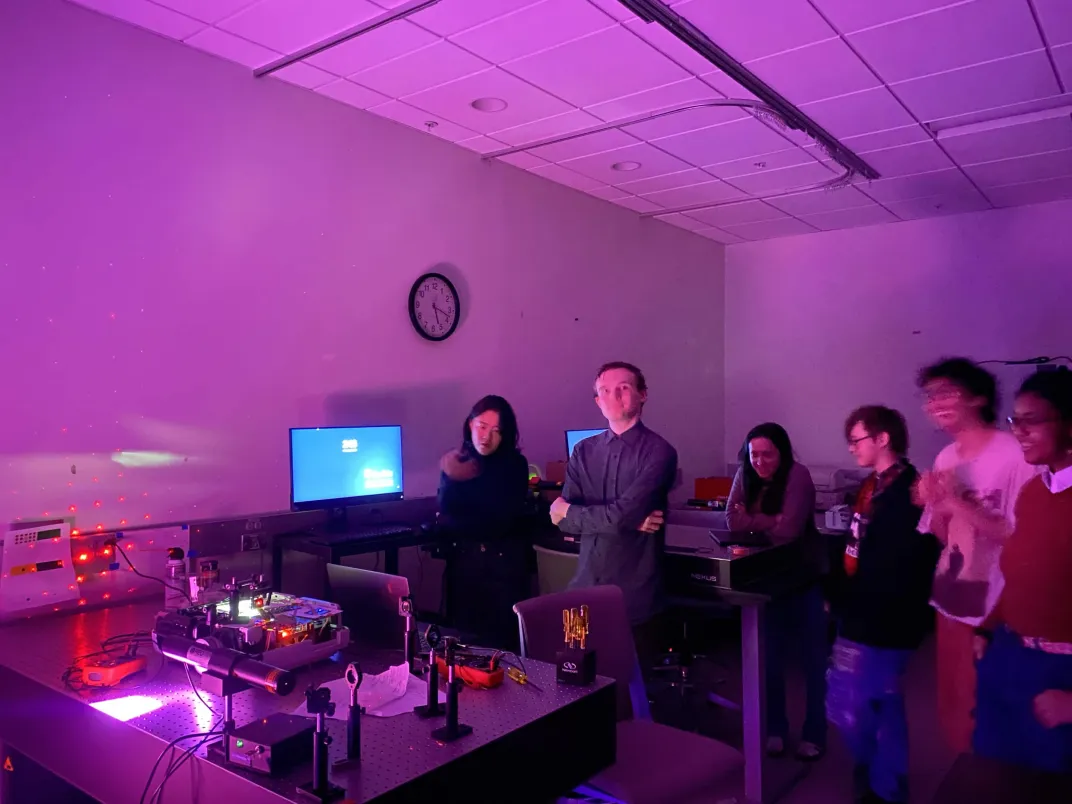
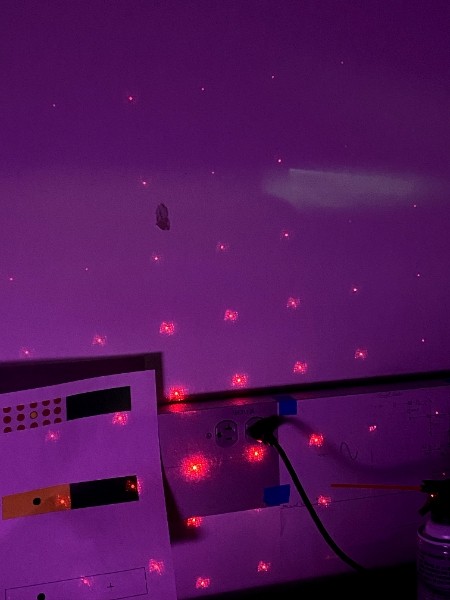
In order to make our computer-generated holograms, we took a projector apart, put an image into the projector from the CGH instruction page, and shined a laser through the microdisplay to recreate the hologram. For more information, see either Huang, et. al (2011) [PDF Download] or Sampson and Noé (2014) [PDF Download].
The math club and physics club both had someone from them do a mini-presentation on the math and physics respectively. Our math presentation was as follows:
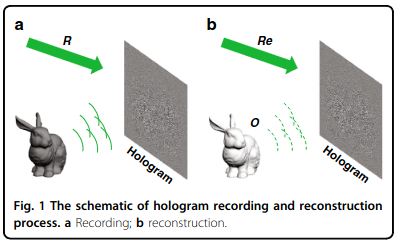
There are many different ways to create a computer-generated hologram, but we will only briefly discuss one of them without much optimization. To create a computer-generated hologram, we need something called a fringe pattern. When we shine a laser through this fringe pattern, we will get a 3D image back (which will then be projected into 2D). How we create this fringe pattern is a question many researchers have tried to answer. We will be using something called the Point-based method.
Essentially, take a 3D object and split it up into a whole bunch of points. Now, we calculate the fringe pattern for each of these points, then glue all of these fringe patterns back together. Of course, if you’ve got a lot of points, this will take a while. So what Lucente found was that if you have all of these calculated in advance and stored, we get our result significantly faster. This is called the lookup table (LUT) method.
To those who aren’t a CS major, essentially, if you already knew the answer to a math problem it would be much easier than if you had to solve the entire thing. I should mention that this doesn’t solve the whole thing, it only has the solutions for the individual points, we still need to solve the final, superimposed version. Now, we have a problem that comes from this. The LUT method trades off calculations for memory space. Thus we get the novel-LUT or N-LUT method.
The N-LUT method works by splitting the object into multiple planes by some given direction (x, y, or z). Then the only pre-calculated value in our lookup table is the center point in this plane. We then use the center point’s fringe pattern to calculate the other other points in our fringe pattern. Of course, the memory cost can still be large even though it’s heavily reduced compared to LUT. There are other methods to improve this further such as split-LUT (S-LUT), compressed-LUT (C-LUT) and its derivatives, and wavefront recording plane (WRP). Moreover, we can also use algorithms that don’t rely on the point-based method such as the polygon-based method and the layer-based method.
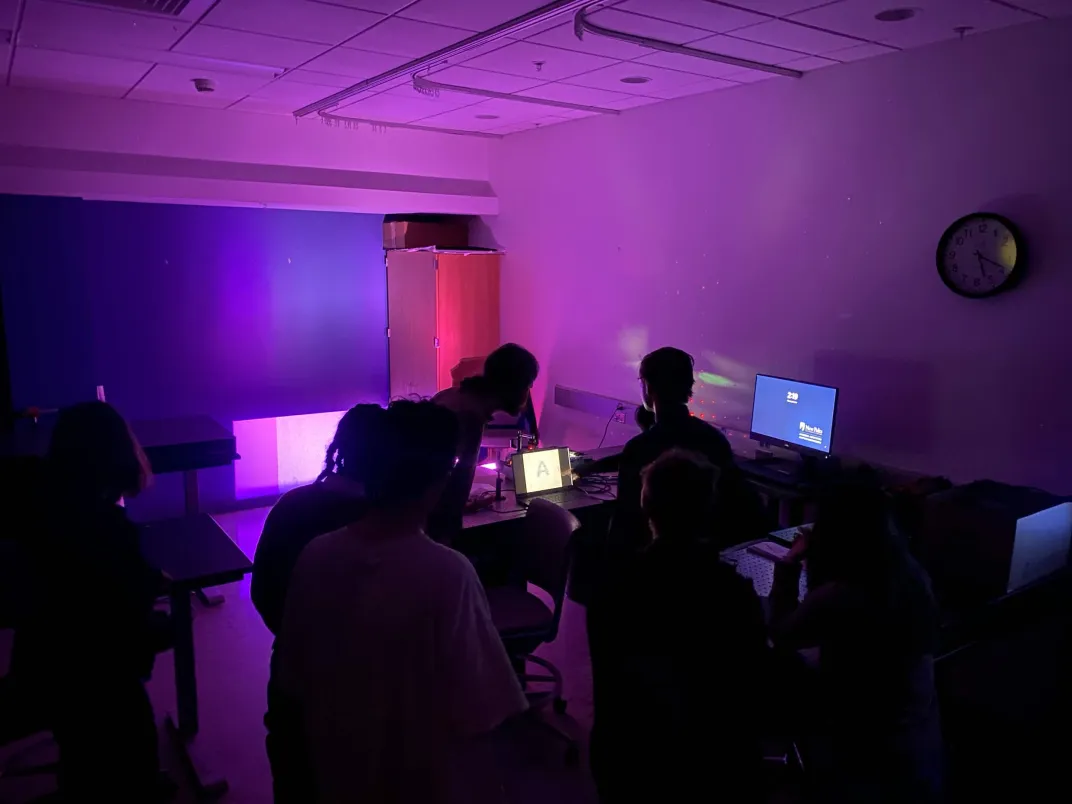
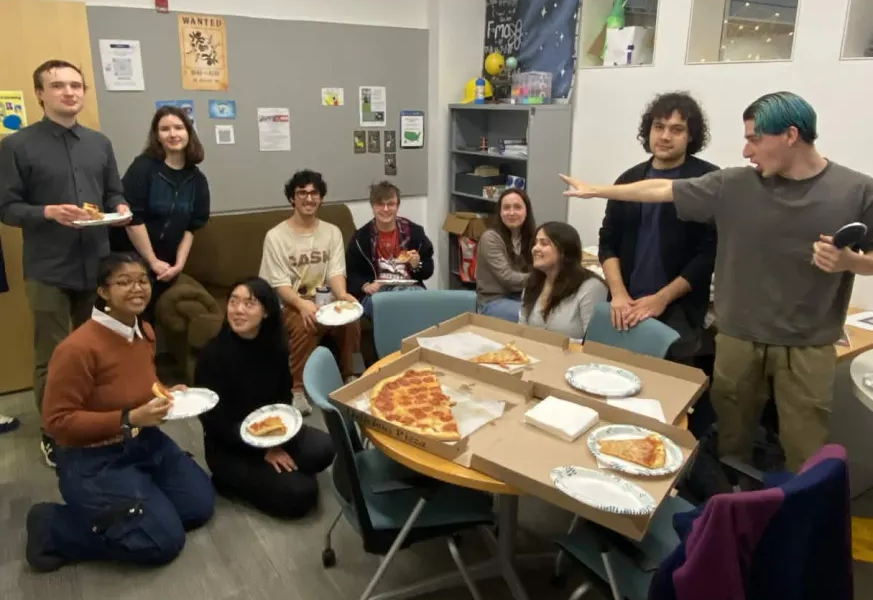
Here are some photos of the event:
If there are any students interested in learning more about holograms, they should consider looking into the following resources: